01 / 06
It starts the conversation
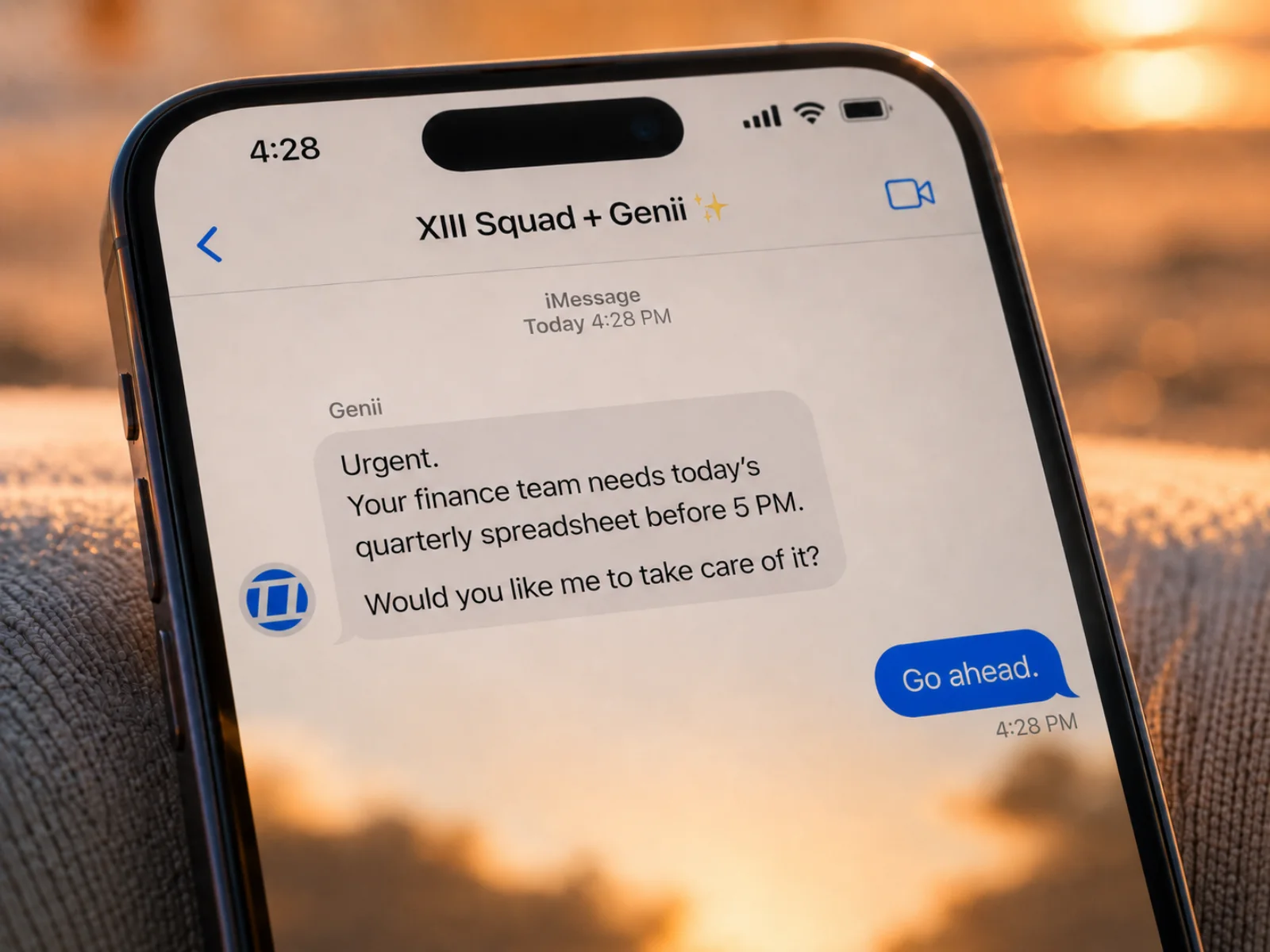
Genii watches the streams you’ve connected and acts on what it finds: the flight open for check-in, the pull request waiting on review, the promise you made in passing three days ago. When something needs you, it texts you first: briefly, at the right moment, with the work already half done.
The point isn’t more notifications. It’s fewer, better ones.
02 / 06
A memory that never resets
Every conversation becomes memory: names, preferences, decisions, the way you like things done. In idle hours it dreams: consolidating what it has learned, connecting the note from March to the plan you made last night, pruning what stopped mattering.
Tell it once; it stays told.
03 / 06
It’s connected to your world
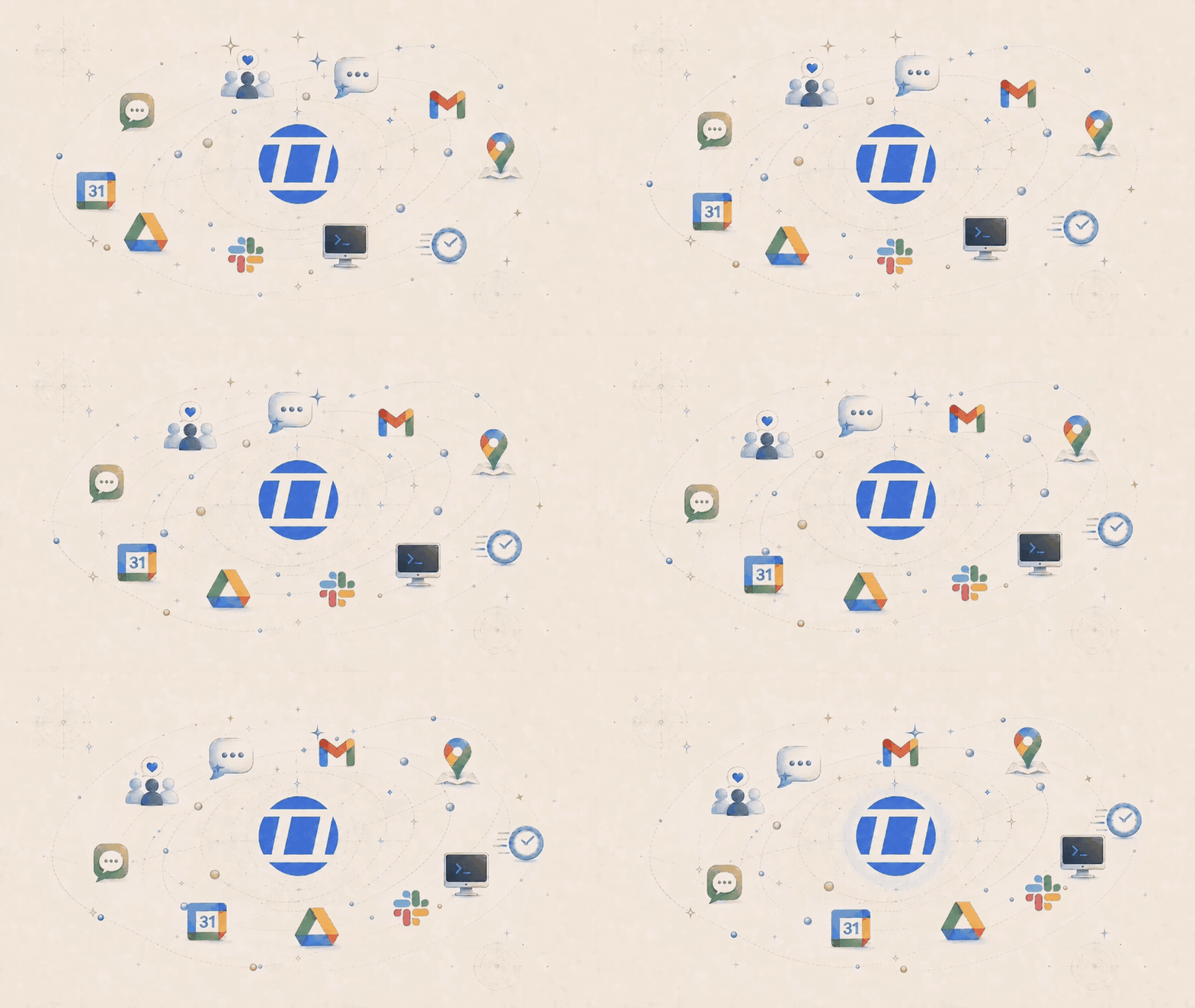
Link Gmail, Google Calendar, Slack, GitHub, Google Maps, and Google Drive. Each connection is both a tool and a source of signal: it can search your inbox and draft replies, summarize the channel you’ve been ignoring, and find the document you only half-remember.
Three connectors, one text.
04 / 06
It speaks
Text "Talk mode" and the conversation moves to live voice: the same assistant, the same memory, in real time. Voice is for the moments typing isn’t: driving, cooking, walking, thinking out loud.
Whatever you decide out loud is already written down when you get back to your desk.
05 / 06
It has its own computer
Every genii comes with a real machine and a real browser, isolated in the cloud. It shops with your signed-in accounts, writes documents, runs research, and ships code while you’re away. Finished work arrives back in your messages.
Nothing consequential happens without your recorded consent.
06 / 06
It joins the group chat
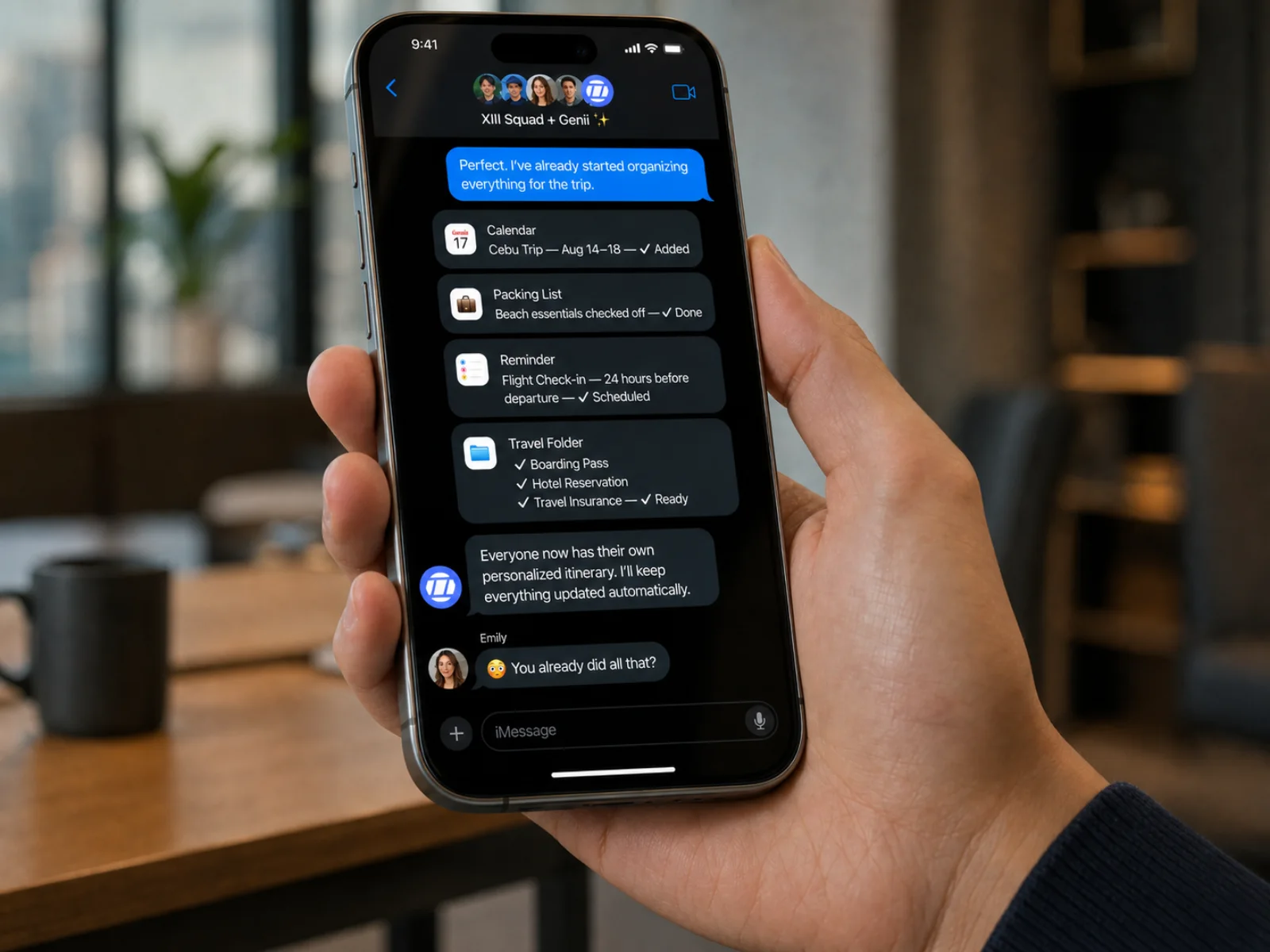
Add Genii to a group conversation and it participates like anyone else: it settles debates, books the restaurant, turns "we should do a trip" into an actual plan. It’s socially aware: it contributes when it’s useful and stays quiet when it isn’t.
It reads the room.